


On World AIDS Day the government announced plans to get an additional 1.1 million people on HIV treatment. To do that we need to use all the tools available to make it happen. One critical tool is the use of community-led monitoring. Ritshidze’s model of gathering evidence at 450+ clinics every three months, followed by using that data to generate solutions that are regularly put to duty bearers for action, has already seen major improvements in our clinics. Where no changes are seen, the launch of targeted campaigns led by the Treatment Action Campaign (TAC) has led to astounding improvements in short periods of time. One example of this has been around increasing the amount of pills people living with HIV collect at each refill.
Why is this important
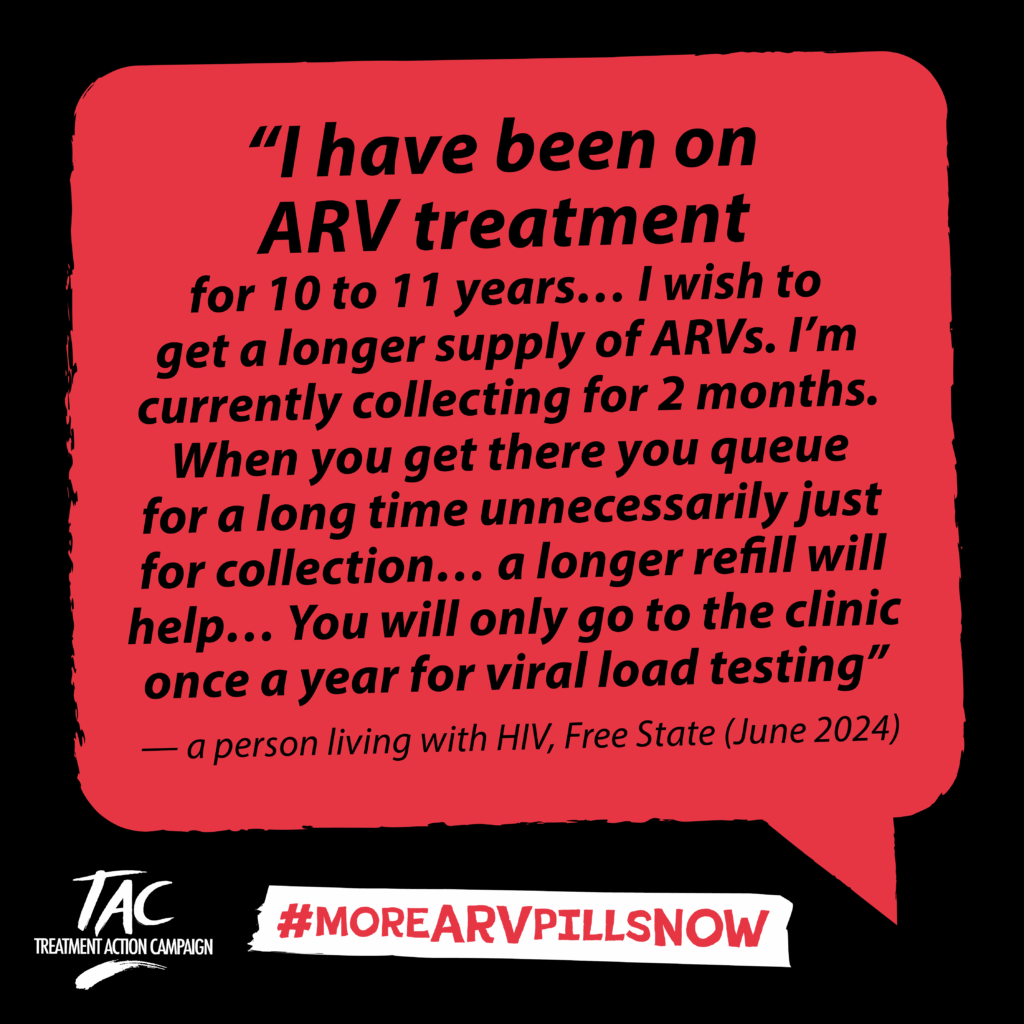
In South Africa, around 2 million people living with HIV are still not on lifesaving HIV treatment – some people not knowing their HIV status, some people knowing but not having started treatment, and worryingly many many people having started on treatment and then stopped. The reality is that often people stop collecting their ARVs because of the burden of having to go to clinics unnecessarily often.
We leave home in the early hours of the morning, often when it is unsafe to do so, only to wait all day to be seen at the clinic. Our files take hours to find or go missing completely, meaning all our medical history is lost. If we are late for our appointments, we can be shouted at and sent to the back of the queue as punishment. If you don’t have a transfer letter or an ID, or if you are a sex worker, use drugs, or part of the LGBTQIA+ community you can be refused ARVs altogether. The taxi fares to go back and forth to the clinic can be financially straining. On top of which you lose out on possible jobs for the day you visit, or are at the mercy of employers letting you take a day off to go.
A simple solution exists to reduce the frequency of clinic visits: for people who are collecting ARVs to simply get a longer supply of medication. Not only would a longer supply of ARVs mean fewer trips back to the clinic – making medicine collection easier – but it would also reduce the burden on already congested and overstretched facilities. The guidelines were revised in 2023 so that everyone who is not sick should be getting a 3 month supply. This was based on strong evidence showing longer ARV supplies support long-term retention.
Thabo Mofutsanyana falling drastically behind
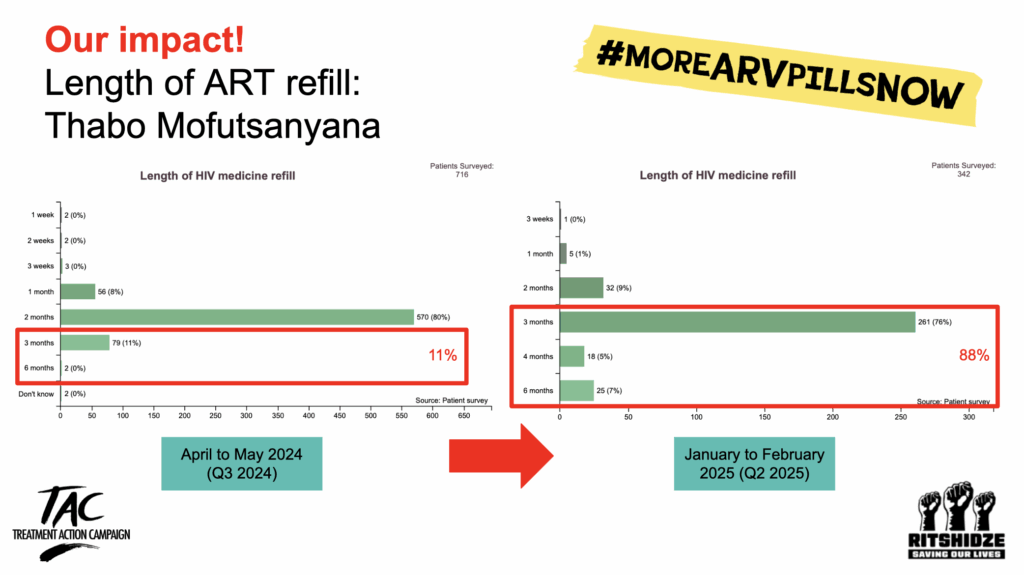
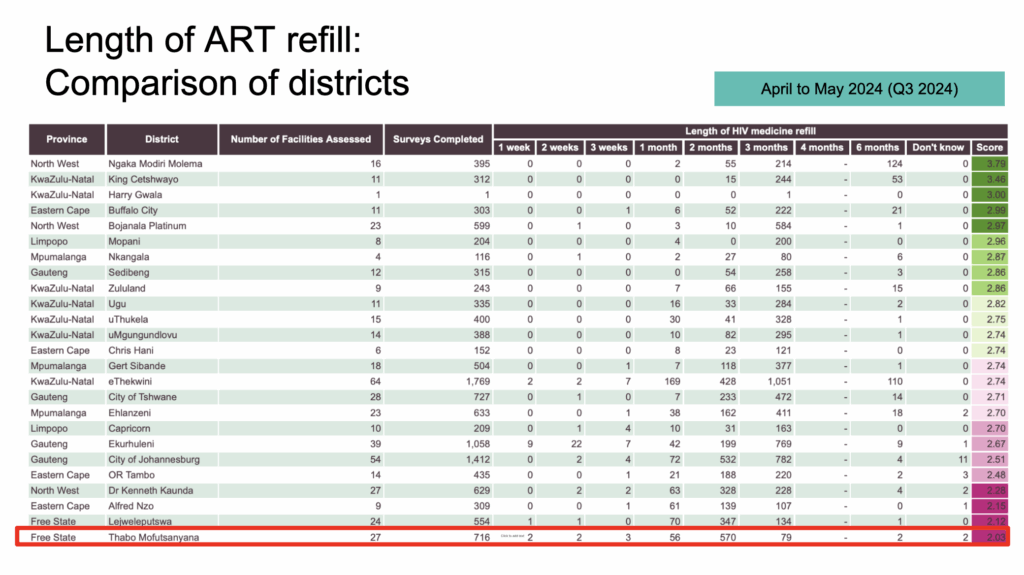
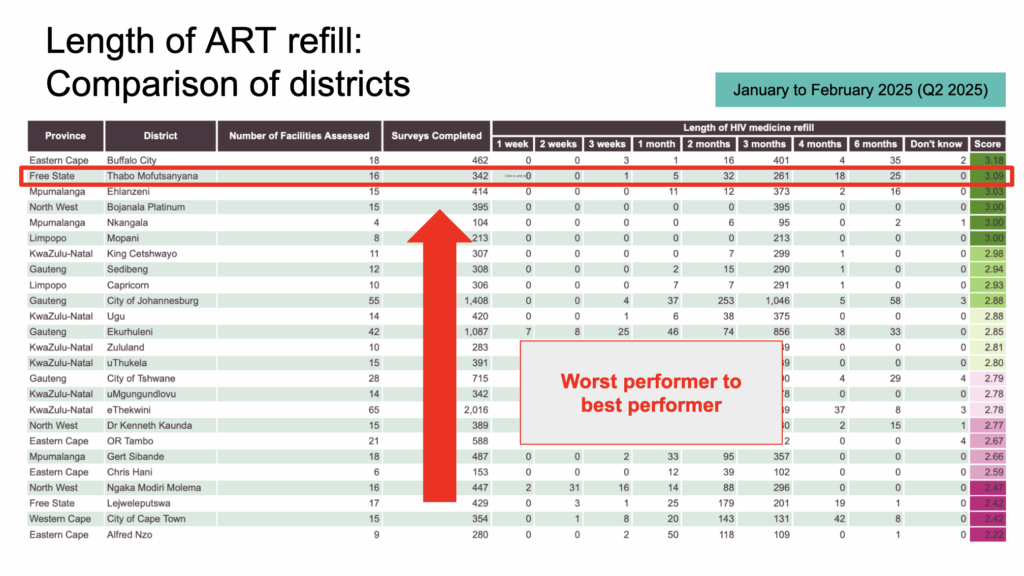
While Ritshidze had been pushing for people to get a 3 month supply for several years, in Thabo Mofutsanyana in the Free State little progress was being made. Last year between April to May 2024 still only 11% of people living with HIV surveyed by Ritshidze reported receiving a 3 month supply – despite being recommended in National ART Guidelines. This compared to as many as 97% of people living with HIV surveyed in Bojanala in the North West reporting getting a 3 month supply, and 85% in Ugu and 82% in uThukela both in KwaZulu-Natal. What was clear is that more action needed to be taken to push the district to implement what the policies were saying.
From zero to hero
The last step of the community-led monitoring cycle, when all else has failed, is to advocate for change. So in April 2024 TAC launched a district wide campaign to push the health department and local clinics to give people a 3 month supply of ARVs in Thabo Mofutsanyana. Our branches in the district were trained on campaign planning and coming up with creative tactics, developing a district owned campaign.
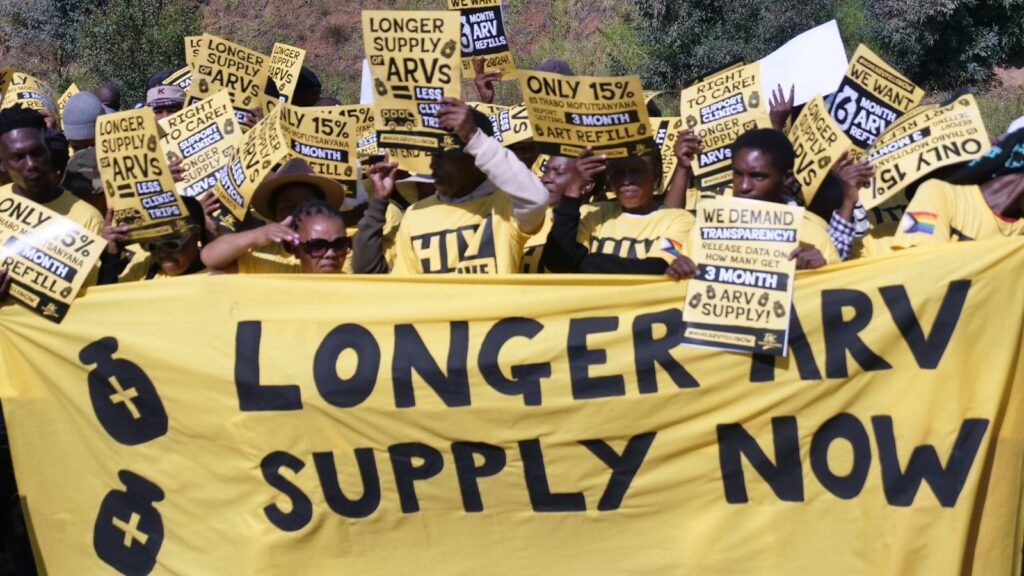
Letters were sent to all duty bearers. Meeting held with clinics and the district health department. Community members were educated on the possibilities of getting longer ARV supplies through door to door and outside clinics, in order to encourage demand creation. People living with HIV were mobilised. We marched in a sea of yellow HIV t-shirts through the streets of Qwaqwa straight to the health department offices. We kept on collecting data to show any progress. We encouraged clinics to comply with the guidelines by scripting a 3 month supply. We continued to engage the department with more letters, meetings, and responses to their concerns.
After just over six months of our campaign, an astonishing change could be witnessed in the data: from just 11% of people getting a 3 month supply up to 88% getting a 3, 4, or 6 month supply. Thabo Mofutsanyana went from the worst performer out of all districts monitored by Ritshidze, to becoming one of the best. We congratulate the department on this excellent turnaround – that points to the importance and impact that Ritshidze community-led monitoring and TAC mobilisation and campaigns can have.
For more information go to www.tac.org.za and www.ritshidze.org.za.